The honest answer is that Waikiki is good in every month. It sits on the sheltered south shore, the water is 75 to 81°F all year, and the trade winds keep the afternoons at 80-something degrees. What changes with the season is the rest of the island: the North Shore flips from glassy snorkel bays to 30-foot surf, the whales come and go, and the prices and crowds swing by half.
Here is how the year actually goes, from people who are on the water every day.
The short version
- Best overall: April, May, September and October. Calm on every coast, whales on the way out or in, fewer people, lower prices.
- Best for the North Shore boats and snorkeling: May through September, when the north swells are gone.
- Best for whales: January through March, with the season running December to April.
- Best for watching big surf: December to February on the North Shore, from the sand.
- Best value: late April to mid June and September to early December, outside the holidays.
- Watch out for: Christmas to New Year and Golden Week (late April to early May, when Japan travels) for prices; hurricane season June to November, which rarely matters but is worth insurance.
Water temperature and swell by season
| Months | Water temp | What the ocean is doing |
|---|---|---|
| Dec to Mar | 75 to 77°F | Big north swells: North Shore beaches dangerous, shark boats cancel on the biggest days. Waikiki and the west side calm. Whales everywhere. |
| Apr to May | 76 to 78°F | North swell fading, trades steady. Everything runs. Last whales in April. |
| Jun to Sep | 79 to 81°F | North Shore flat and glassy, Sharks Cove and Waimea Bay snorkelable. Summer south swells bring real waves to Waikiki for surfers; the boats are unaffected. |
| Oct to Nov | 78 to 80°F | First north swells arrive in October. Trades lighten; kona (southerly) winds occasionally bring humid, still days. Whales return in late November. |
Month by month
January and February
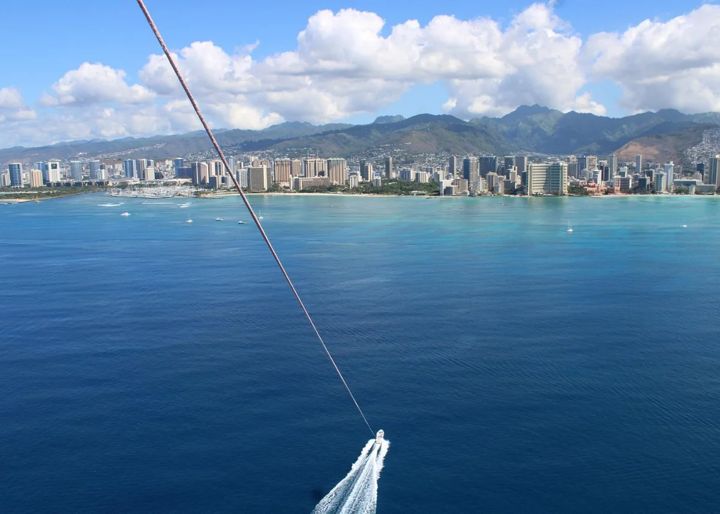
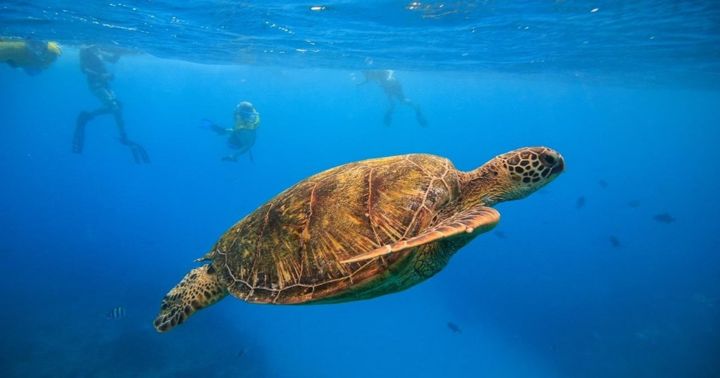
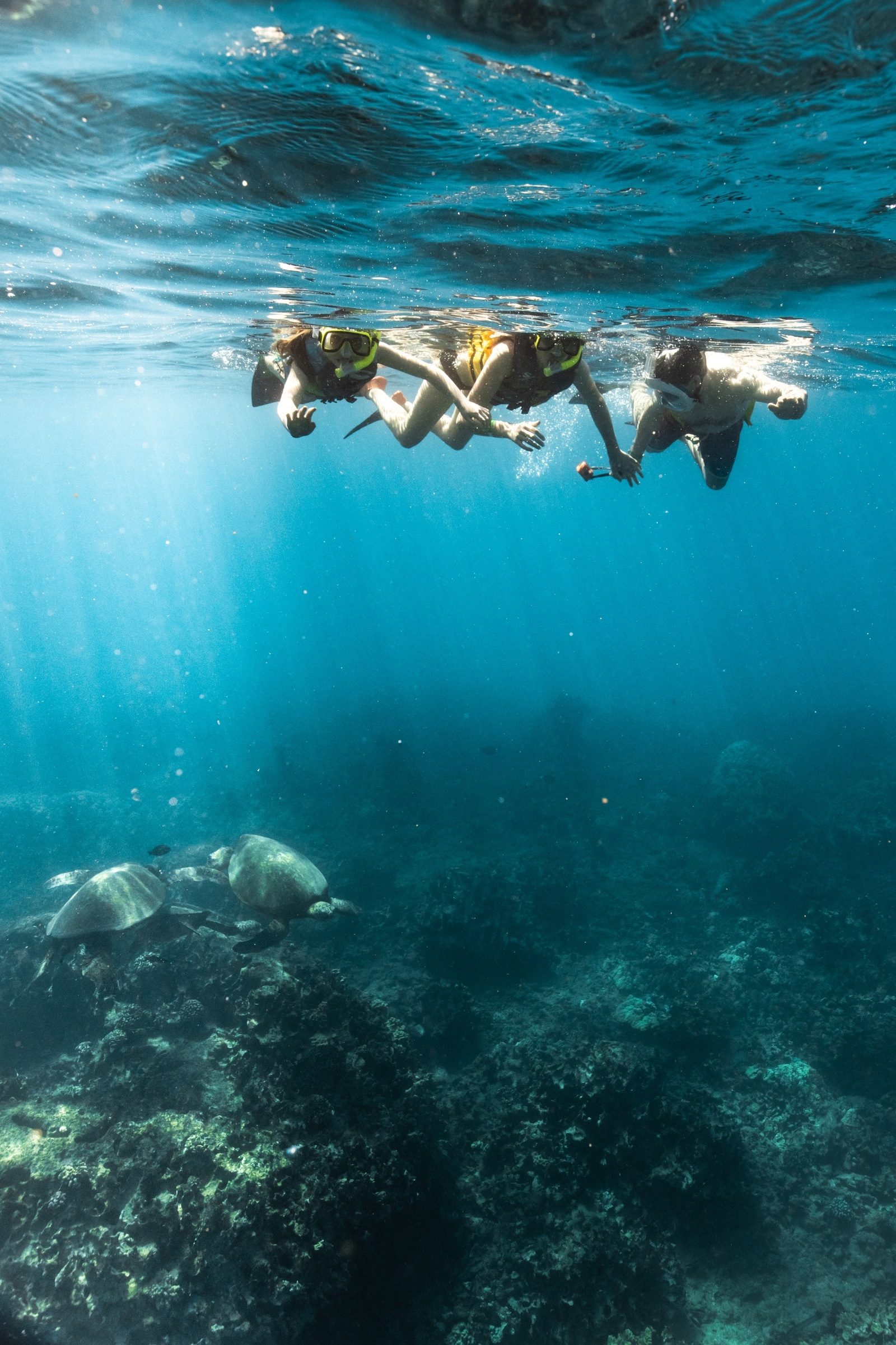
Peak whale season and peak surf. Highs around 80°F, cool nights, and the wettest months of the year, mostly in short showers over the mountains. The North Shore swells are at their biggest: the big-wave contests run, the beaches are for watching, and the shark snorkel goes out only on the calmer days. Waikiki is flat and sunny; parasailing and the Turtle Canyon snorkel run every day with whales below. The west side is the whale coast: the dolphin safari becomes a dolphin and whale trip for the same price. Prices are high through mid-January and around Presidents’ Day.
March
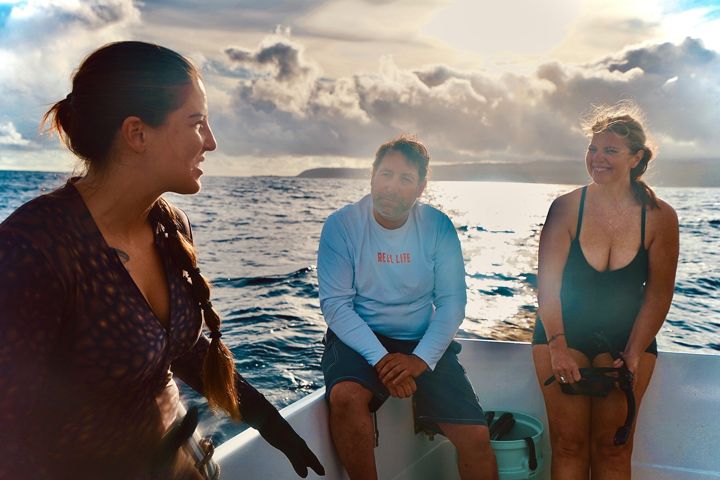
Whales still thick, swell easing, spring break crowds. The North Shore starts to calm by the end of the month. A good month for the sunset sail with spouts at golden hour. Book the dolphins and sharks early; spring break families fill the small boats.
April and May
Our favorite months. The north swell is gone, the water is warming, every boat on the island is running, and the crowds and prices drop after Easter, with one exception: Golden Week, Japan’s holiday cluster in the last days of April and the first of May, fills Waikiki hotels. The Mokulua kayak has its lightest winds and the last whales pass in April.
June, July and August
Summer: flat North Shore, warm water, long days and the busiest season for families. This is the best season for the shark boats and for snorkeling at Waimea Bay and Sharks Cove. Waikiki gets its summer south swells, which make surf lessons more fun and leave the catamarans and parasail boats untouched. Afternoon trades build daily, so morning departures are the smart ones everywhere. Hotel prices are at their highest outside Christmas.
September and October
The locals’ summer. The water is at its warmest, the North Shore stays flat into October, school is back in and prices fall. Hurricane season is technically open but Oʻahu sees a real threat about once a decade; buy insurance and do not worry. The first north swells arrive in late October, which is the signal that the surf season is coming.
November
The shoulder. Rain picks up, the north swells build and the surf contests begin at Haleʻiwa. The first whales appear in the second half of the month. Thanksgiving week is busy; the two weeks either side are quiet and cheap.
December
Winter proper: big surf, whales, short showers, and the most expensive two weeks of the year from Christmas to New Year, when hotels sell out months ahead. The first three weeks of December are a quiet bargain. The Honolulu Marathon is the second Sunday.
Which trip, which month
- Parasailing, Turtle Canyon snorkel, sunset sail: every month; whales December to April.
- North Shore shark snorkel: best May to October; runs in winter on calm days with more cancellations.
- North Shore ATV: every month, rain or shine; winter puts the big surf beside the trail.
- West side dolphins: every month; December to April doubles as a whale watch.
- Kailua kayak: best April to October for light winds; winter runs when the bay allows.
- Hanauma Bay, Diamond Head, Pearl Harbor: every month; go early.
Weather, briefly
Oʻahu has two seasons: summer (May to October), drier and a few degrees warmer, and winter (November to April), wetter and a few degrees cooler. Waikiki, in the lee of the Koʻolau range, is the driest part of the island and sees sun most days year round; the windward side and the North Shore get the showers. Trade winds blow from the north-east about 300 days a year and keep the humidity down; when they stop and the kona winds come from the south, it gets sticky for a few days and the south shore boats feel it. Hurricanes are rare, and the island has not taken a direct hit in decades.
When to book
Peak-season trips with small boats (the six-seat shark boat and the eight-seat dolphin boat) sell out a week or more ahead in summer and over the holidays, and the dolphin safari has a ten-day cancellation window. Hanauma Bay reservations open two days ahead and go in minutes. Diamond Head needs a day or two. Pearl Harbor’s Arizona boat opens eight weeks out. Everything else in Waikiki can be booked the day before. For the full list and what each one costs, see our top adventures.
Written by Oʻahu locals who spend their days on the water.